Alaska to Antarctica and why now is exactly the right time to book it
Table of Contents
When the forecast climbs past triple digits and the usual summer plans start to feel less like a vacation than an endurance test, the most memorable travel happens in the opposite direction: toward the cold!
The trips below run between December and June, which means right now is precisely the time to book that cool trip. These are not last-minute destinations. The good ships are small, the good lodges have a dozen rooms, and the “best” dates sell out six months to a year ahead. The people who travel in February booked as early as the previous July.
One thing to know before you start. Between December and April, up north is the deep cold: the darkest, coldest, most spectacular stretch of the year. Down south, it is the opposite, a brief warm window that slams shut by autumn. Same months, opposite meanings. Both bookable today!
We will be posting part two on August 7th, covering the other half of the calendar, July through November. Stay tuned and have your friends join the blog adventures by sending this to them!
Patagonia and the Andes
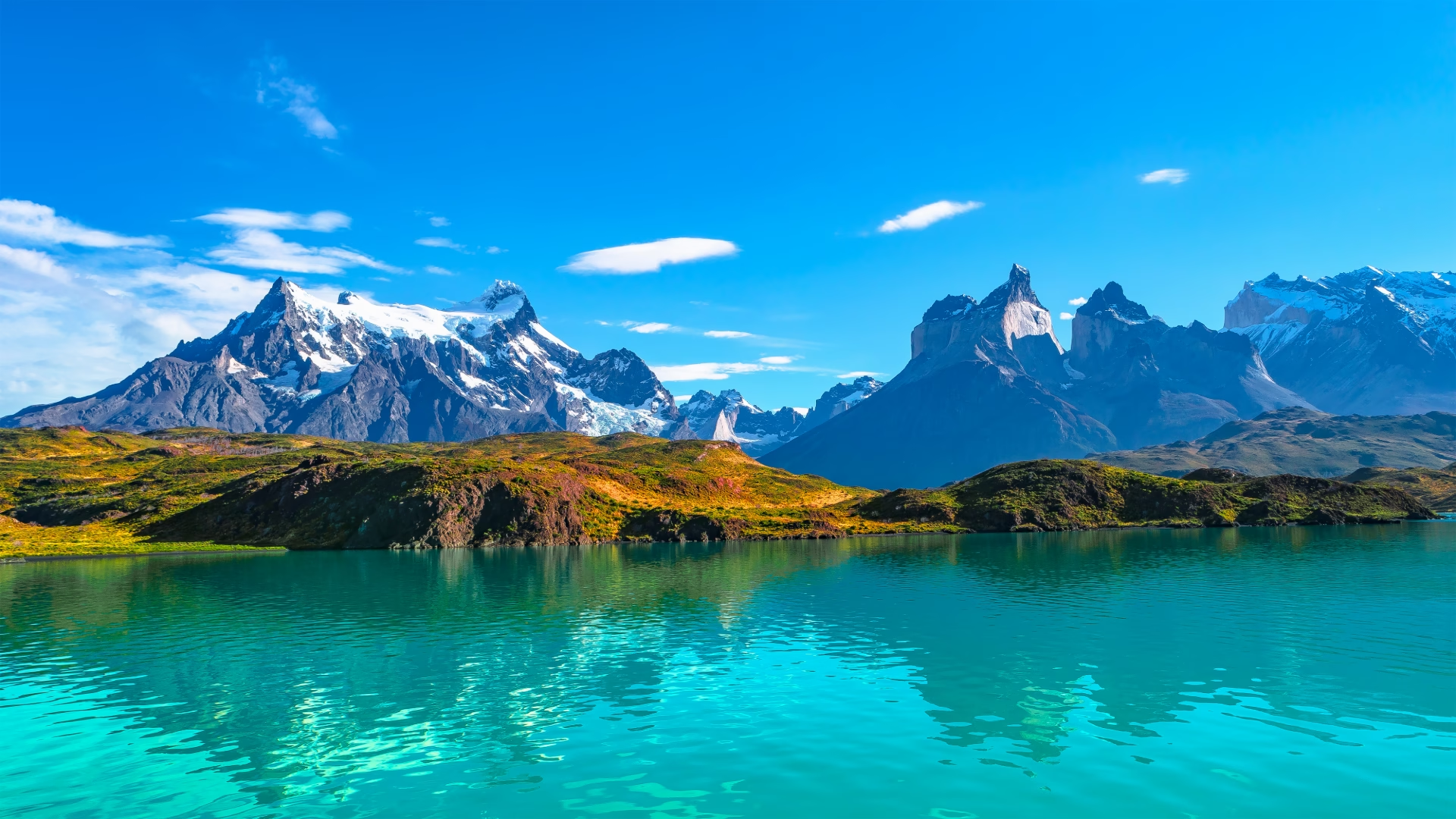
We’ll start with the South Hemisphere as it experiences its summer during this time period, and it is short.
December through February is peak Patagonia. Torres del Paine is fully open, every refugio and trail and road is running, and December alone gives you around 16 to 17 hours of daylight to spend on the W Trek. Days are warm, around 66°F, and the nights stay mild. The catch is the wind, which is famous for a reason and is at its strongest in December and January, and the crowds, which are at their thickest in exactly the same weeks. January is the warmest, busiest, windiest month of the year.
If you can move a few weeks later, March and April are the connoisseur’s window: autumn colors across the park, noticeably less wind, thinner trails, and softer light. Be aware that by late March some routes may require a certified guide, and by May the park effectively stops being a solo-hiking proposition at all.
Then, in June, the whole thing inverts one more time and ski season opens. Portillo and Valle Nevado in Chile get going in the second half of June; Cerro Catedral, above Bariloche, Argentina and the largest resort in the Southern Hemisphere, follows at the end of the month. Opening weeks are quieter and cheaper than the July holiday rush, which is a useful thing to know.
The season, December to June
December to February · Peak Patagonia. Torres del Paine wide open, 16 to 17 hrs of daylight, around 66°F. Windiest and busiest.
March to April · Autumn color, less wind, fewer people. Some routes may require a guide.
May · Winter closing in. Trails restricted, guided groups only.
June · Ski season opens. Portillo and Valle Nevado mid-to-late June, Cerro Catedral end of June.
This is the one entry here that is not cold because of where it is. It is cold, or briefly warm, because of when it is. The southern hemisphere simply runs the calendar upside down, and that is the whole opportunity.
Alaska and Gates of the Arctic National Park
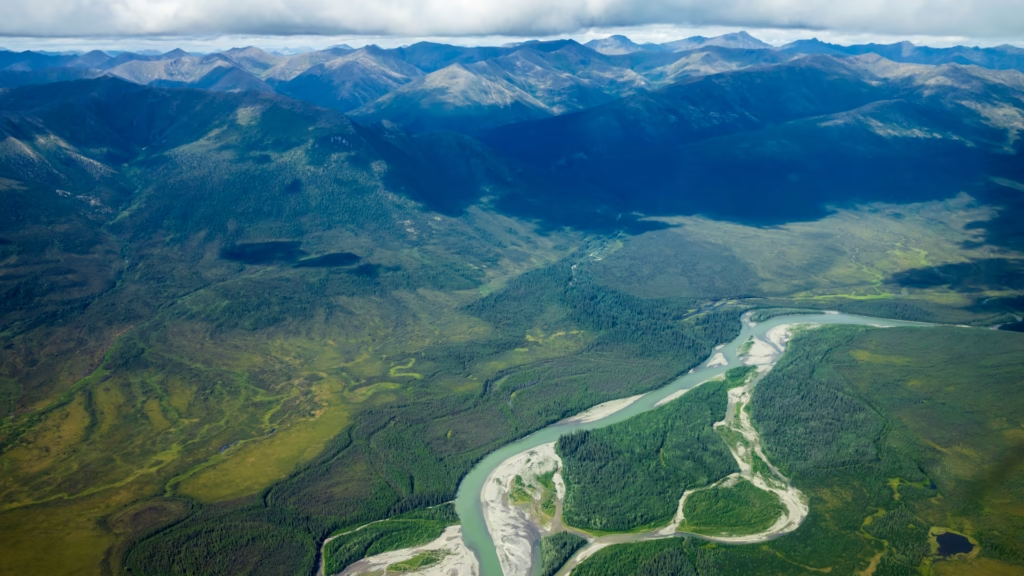
Winter Alaska is a completely different animal from the summer version, and very rewarding for travelers wanting a pure winter vibe.
A reason to travel to Alaska is the auroras. Fairbanks sits directly beneath the auroral oval, the ring-shaped band where the lights are most active, and the payoff for that geography is remarkable: during aurora season the lights appear an average of four nights out of five, provided the sky is clear and dark enough. That is not a lottery ticket. That is nature’s schedule.
December and January give you the deepest darkness; are starkly cold and barely four hours of semi-daylight. The sweet spot is February and March, when the nights are still long enough for the lights, the days have opened up enough for dog sledding and snowmobiling, and the snow is at its best. February through April also happens to be the clearest months in the interior, which matters more than raw aurora activity: no amount of geomagnetic drama helps you through a dense cloud deck.
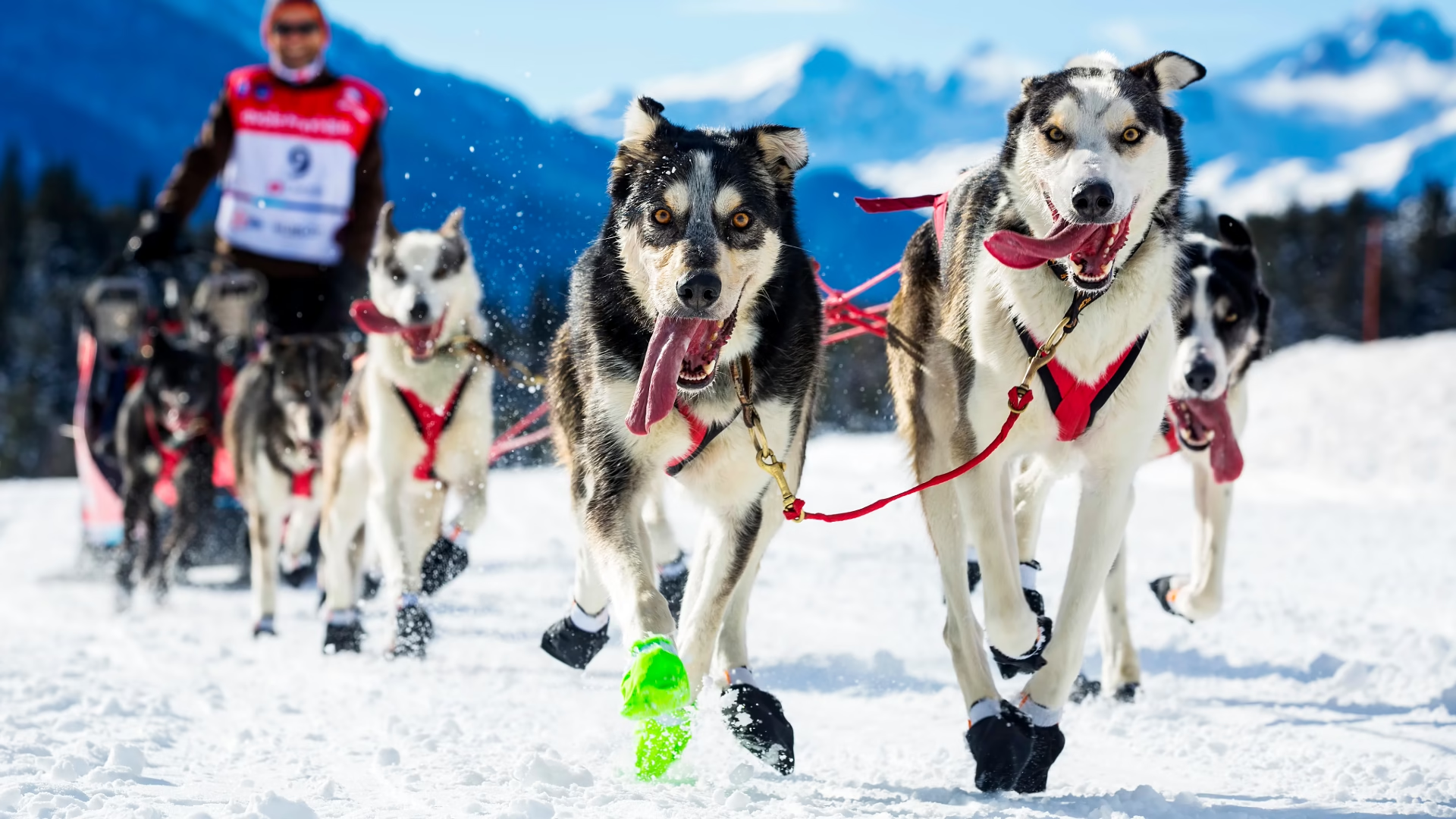
March is the month with everything happening at once. The Iditarod Trail Sled Dog Race starts on the first Saturday of the month, which in 2027 is March 6, and the World Ice Art Championships bring carvers from all over the world to Fairbanks. Then, by late spring, the whole state turns over: the Denali Park Road buses start rolling around May 15, and by June, Gates of the Arctic National Park is reachable again and we are back to the summer in Alaska.
Daylight in Fairbanks
December ~4 hrs · January ~5 · February ~8.5 · March ~11.5 · April ~15 · May ~18.5 · June ~21.5
The Fairbanks aurora season
Season · roughly 21 August to 21 April.
Hit rate · the lights appear an average of four nights out of five when skies are clear and dark.
Clearest skies · February through April.
Best all-round window · February and March. Long nights, workable days, best snow.
Also in March · the Iditarod (6 March 2027) and the World Ice Art Championships.
Churchill, Manitoba
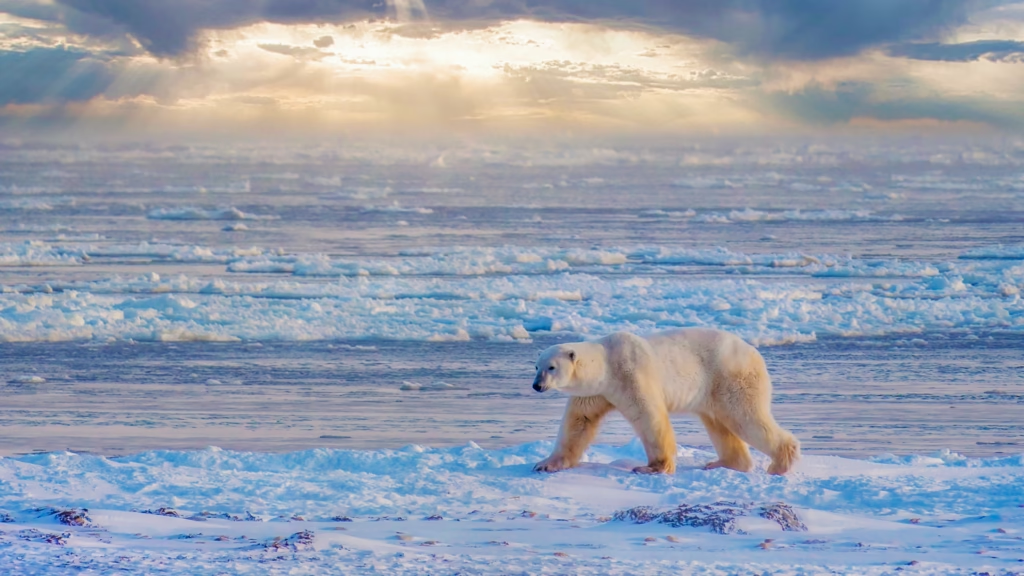
Churchill is famously known for their autumn polar bears. Almost nobody knows what happens there in late winter, which is genuinely the best-kept secret on this list.
Here is the sequence:
- The cubs are born in the dens of Wapusk National Park around the end of November, roughly 43.5 km inland, and they stay down there nursing through the dark.
- Then, sometime between early February and late March, the mothers break out and bring them up into the light for the first time, and the family begins the walk to Hudson Bay so she can finally hunt. She has not eaten in months.
- Watching a brand-new cub take its first look at the world is a different order of experience from watching adult bears pace a shoreline.
The timing is not a coincidence, either. February and March are also the peak of Churchill’s aurora season, for the same reason they are peak in Fairbanks: cold, stable air, clear skies, and long nights. Churchill sees the northern lights on something like 300 nights a year. So the same trip that gets you cubs also gets you the sky.
Then spring arrives, slowly. The birds come back, the bay begins to break up, and by late June the first beluga whales are nosing into the estuary.
Churchill by month, December to June
December to January · Cubs born in the dens, out of sight. Deep cold, deep dark.
February to March · The window. Cubs emerge from the dens, and the aurora peaks.
April · Aurora holds up. Cold, clear, quiet.
May · The thaw. Migratory birds return.
June · Belugas begin arriving late in the month.
Worth knowing
Aurora nights · roughly 300 a year, best in February and March.
Den emergence · early February to late March, in Wapusk National Park.
Access · no roads in. Fly from Winnipeg (about 2.5 hrs) or take the train (about two days).
Guiding · Wapusk can only be visited with a licensed operator, and the den-emergence trips are small and specialized.
February in Churchill is seriously cold, but it is a condition to prepare for, not a reason to stay away. Operators provide guidance for getting the right gear, so respect the weather, dress properly, and have a great time!
Antarctica
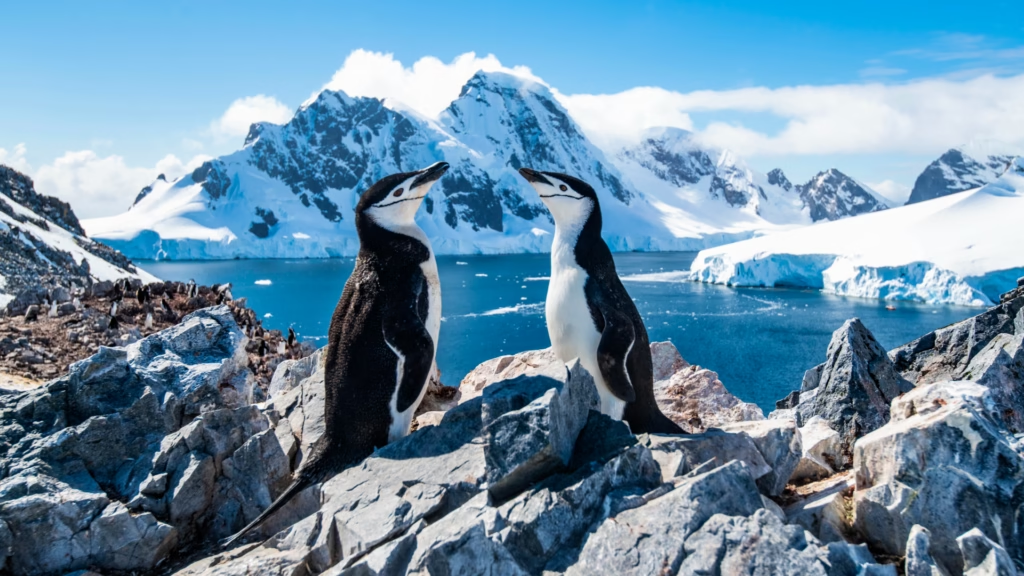
The coldest and wildest destination of them all is reachable for about five months a year, and December through March is the heart of it. Outside that season the continent is simply closed. No ships, no exceptions.
December and January are the peak: over 20 hours of daylight, the warmest temperatures the place ever offers at roughly 34 to 41°F, and wildlife at full volume. By early December the penguins are mostly sitting on eggs, and by January the chicks are hatching in earnest. Conditions are at their most stable, which means the longest landings and the best odds of actually getting ashore where you hoped to. December and January are the peak, and they cost like it.
February is when the character changes. The sea ice pulls back far enough to open the Antarctic Circle and the Weddell Sea to ships, the chicks start to fledge, and the whales arrive in force. February and March are the best whale months of the season, with humpbacks, minkes, and orcas around the ship. By March the whales have been gorging on krill for months and turn noticeably curious about zodiacs.
March closes it out. Fewest ships, lowest prices, spectacular low-angle light, and a real chance at the aurora australis, the Southern Lights. The trade is that the snow cover is at its thinnest, so the landscape looks more rock than ice. And then in April the door shuts until November.
The Antarctic season
December to January · Peak. Over 20 hrs of daylight, warmest temps (34 to 41°F), chicks hatching, most stable conditions. Priciest and busiest.
February · Ice recedes, opening the Antarctic Circle and the Weddell Sea. Chicks fledge, whales arrive.
March · Best whales of the season. Fewest ships, lowest prices, aurora australis possible. Thinnest snow cover.
April to June · Closed. The continent is entirely inaccessible to cruise ships.
There is no bad month inside the season, only different ones.
A Quick Recap of Cool Destinations, by Month
If you are selecting by month rather than a place, start here:
December to June at a glance
December and January · Antarctica at its peak, Patagonia’s trekking season wide open, and the darkest, coldest aurora nights in Alaska.
February and March · The best pair of months on this whole list. Polar bear cubs emerging in Churchill, peak aurora in both Churchill and Fairbanks, the Iditarod Trail Sled Dog Race, whales in Antarctica, and autumn color coming to Patagonia.
April and May · Aurora season winds down, Antarctica closes, and Patagonia’s trails go quiet. Alaska starts waking up.
June · Everything turns over. Gates of the Arctic reopens, belugas reach Churchill, and ski season starts in the Andes.
If you only remember one thing: February and March are the best-value, highest-density months in this entire post, and they are the ones people forget to book.
The real magic of traveling cool is twofold: the places themselves, and the timing. Go in these months and you trade crowds and heat for smaller groups, gentler shoulder-season prices, and experiences you simply cannot have on a hot beach: from a newborn polar bear cub to the aurora to a humpback surfacing beside a zodiac.
And when you are ready for the other half of the year, part two covers July through November in the Arctic North: Iceland, Svalbard, Norway, and Finnish Lapland. Stay tuned for that blog on August 7th!
Found your month? Give us a call and let us send you somewhere seriously cool (pun fully intended)! Contact our excellent travel experts at 503-224-0180 or email [email protected].
Don’t miss a post! Subscribe to our blog!