The Arctic North: Iceland, Svalbard, Norway, and Finnish Lapland
Table of Contents
When the forecast climbs past triple digits and the usual summer plans start to feel less like a vacation than an endurance test, the most memorable travel happens in the opposite direction: toward the cold!
So let’s go all the way to the top of the map. Four cool destinations in the far north, one window, and one variable that governs every trip in this post: the light!
Everything below is really a story about daylight. Between July and November, the Arctic gives up its light, quickly, and nearly everything worth seeing up here is keyed to that loss. The midnight sun makes the summer. The darkness that replaces it makes the aurora. Come in July for endless days and open country. Come in September, October, or November for the northern lights and thinner crowds. Either way, you are not really choosing a country. You are choosing a month.
Iceland
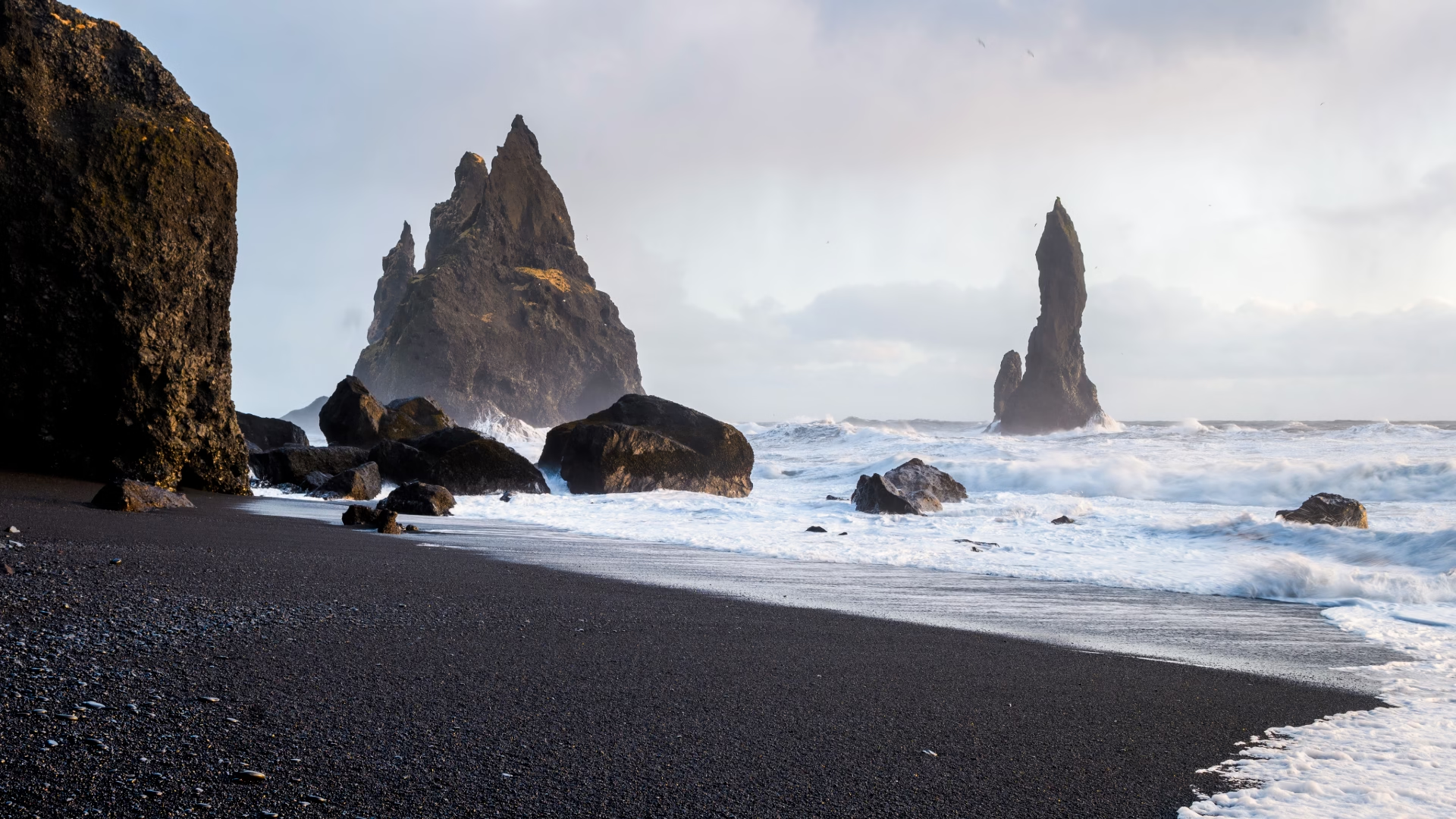
Iceland is the easy one, the low-effort answer to “somewhere that isn’t hot,” and it stays cool and green even at the height of summer. July and August highs hover around 50 to 55°F, the highland roads are open, the waterfalls are roaring with snowmelt, and the daylight barely quits.
Then it shifts. By September the crowds thin, the prices ease, and the northern lights return to a sky that has finally gone dark enough to show them, lingering through the autumn. October and November take you deeper into aurora season, with fewer visitors and softer shoulder-season rates. Ask Nancy, who went one February, and Barb, who went in May of 2025, and you will get two descriptions of a country that barely sound like the same place.
Don’t miss in Iceland
The South Coast · black-sand beaches at Reynisfjara and the waterfalls at Seljalandsfoss and Skógafoss. You can walk behind the first one.
Jökulsárlón · icebergs drifting through a glacial lagoon, with the Diamond Beach just across the road.
The Golden Circle · Þingvellir’s rift valley, the Geysir hot springs, and Gullfoss waterfall, all in a day from Reykjavík.
A geothermal soak · the Sky Lagoon by Reykjavík or the Mývatn Nature Baths up north, plus the Blue Lagoon when it’s open.
Whale watching · from Húsavík in the north, best through the summer months.
The northern lights · from September onward, once the nights go properly dark.
Daylight in Reykjavík
July ~19.5 hrs · August ~16 · September ~12.5 · October ~9.5 · November ~6
Thirteen hours lost between July and November. That drop is also the reason aurora season starts in September: the lights need a dark sky, and until late August, Iceland doesn’t have one.
Svalbard, Norway
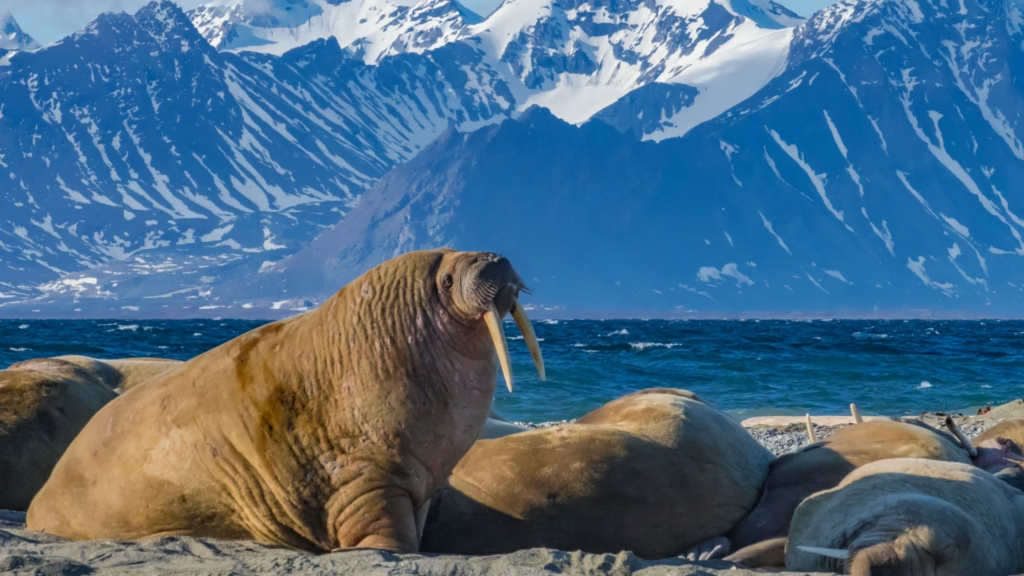
This Arctic archipelago, roughly halfway between mainland Norway and the North Pole, is about as far north as some travelers will ever set foot. It is genuinely cold even in summer: July, the warmest month, averages just 37 to 46°F. That is rather the point.
From June into August, the sea ice loosens enough for small expedition ships to explore under a sun that never sets, and the wildlife is the headline act: polar bears hunting along the ice edge, walruses hauling from sea to shore, reindeer, Arctic foxes, and whales. Because the surrounding waters freeze solid the rest of the year, this brief summer window is really the only practical time to go. Come September the birds have gone, but the whales, bears, and walrus remain and the first aurora appears. By October the reindeer are in rut and the last ships sail, and in November the polar night takes hold, and the lights can show at any hour.
Don’t miss in Svalbard
A summer expedition cruise · the only way to reach the pack ice and the wildlife, and it runs June to August.
Polar bears, walrus, and whales · along the ice edge on shore, ideally from the deck of a small ship.
Longyearbyen · the world’s northernmost town, with a surprisingly good food scene and the excellent Svalbard Museum.
Pyramiden · the eerily preserved abandoned Soviet mining town, reachable by boat in summer.
The first aurora · from September, once the endless daylight finally starts to fade.
Wildlife in Svalbard
July · Peak. Bird cliffs, walrus, whales, bears on the ice.
August · The same until mid-month, then the birds go.
September · Birds gone. Whales, bears, walrus, first aurora.
October · The reindeer rut. Last ships out.
November · Reindeer, fox, ptarmigan, bear. Aurora possible at any hour.
The Norwegian Fjords, Lofoten Islands, and Tromsø
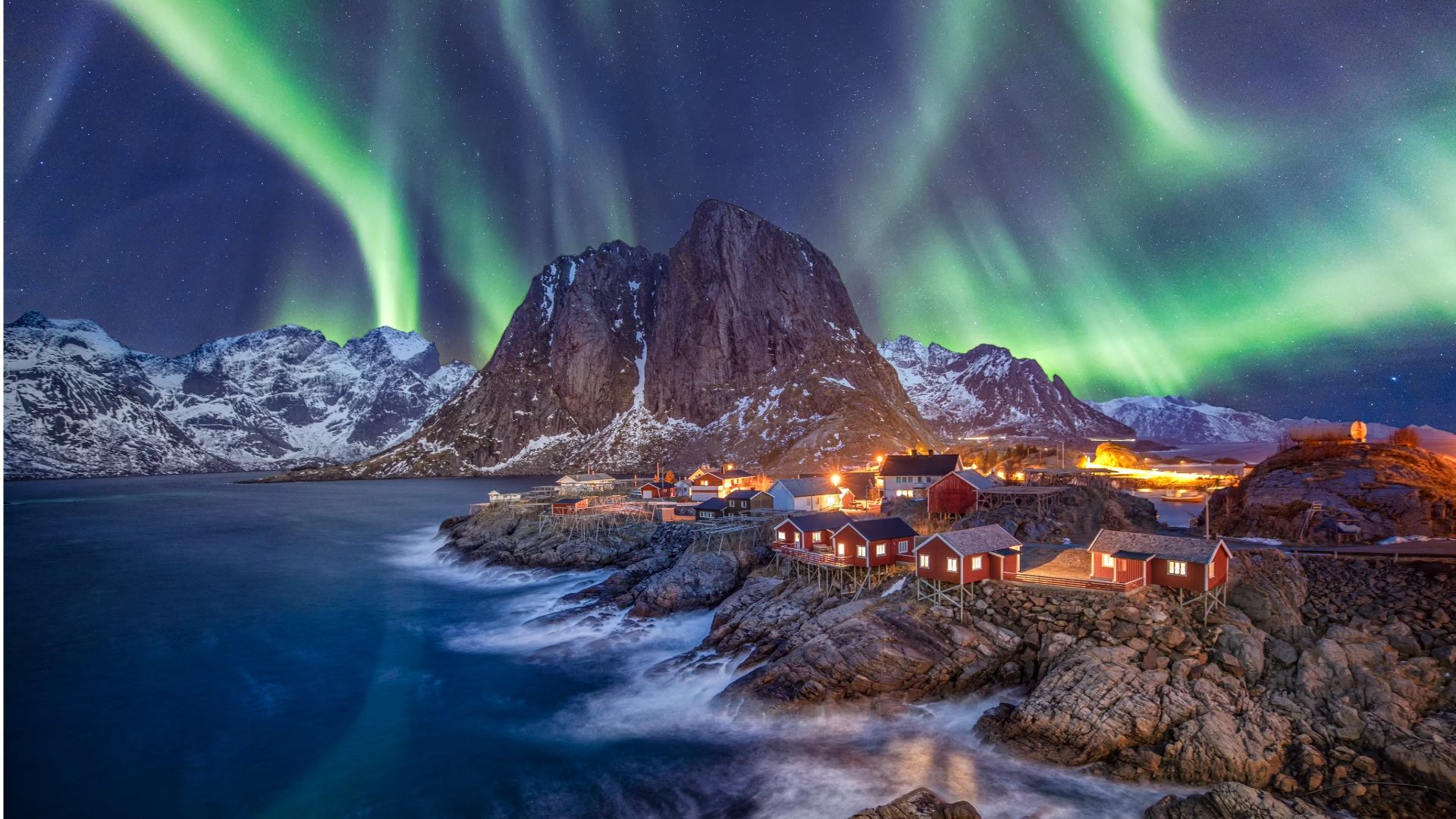
Norway gives you two entirely different trips inside this window, and the hinge between them is the sun.
In July and August, the western fjords and the Lofoten Islands are at their finest: deep blue water, sheer cliffs, red fishing cabins, cascading waterfalls, and, in the far north, the midnight sun. The air stays crisp even in the middle of summer. This is the season for being outside at hours that make no sense, hiking after dinner, kayaking at midnight, watching the light go gold instead of dark.
Then, as the dark returns in late September, the trip inverts. Tromsø, well above the Arctic Circle at nearly 70° north, becomes one of the most reliable places on earth to chase the northern lights. It sits squarely inside the auroral oval, which is why it delivers so consistently on nights that would show you nothing much further south. It is also a real city: good food, good museums, and a warm room to come back to at two in the morning. And by late October to early November, the winter whales arrive: orcas and humpbacks following the herring into the fjords, lately around Skjervøy to the north.
Don’t miss in Norway
The fjords · Geirangerfjord and Nærøyfjord, both UNESCO-listed, and both best seen from the water.
The Lofoten Islands · red fishing cabins at Reine and Hamnøy, dramatic hikes, and midnight-sun kayaking in summer.
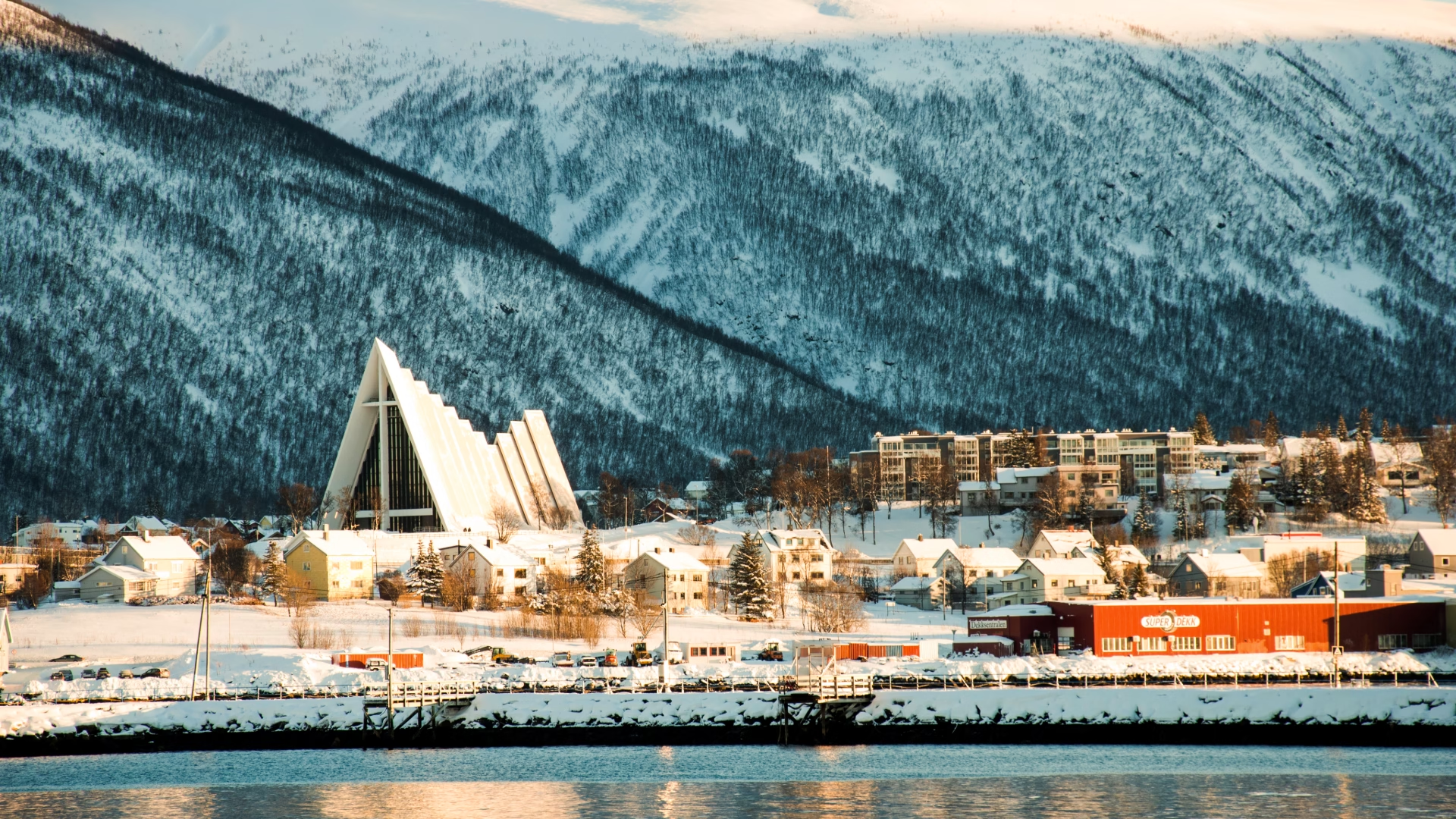
Tromsø · the aurora capital from late September, plus the Arctic Cathedral and the cable car for the view over the city.
Winter whales · orcas and humpbacks arriving off Skjervøy from early November, often several pods in a single trip.
The midnight sun · through late July, for hiking and kayaking at genuinely impossible hours.
The Tromsø calendar
Midnight sun · roughly 20 May to 22 July. The sun does not set at all.
Aurora season · late September into early April.
Winter whales · early November onward, as the herring arrive.
Polar night · from 27 November, the sun stops rising.
Daylight · July 24 hrs · August ~18 · September ~13.5 · October ~9 · November ~4, then zero
Finnish Lapland
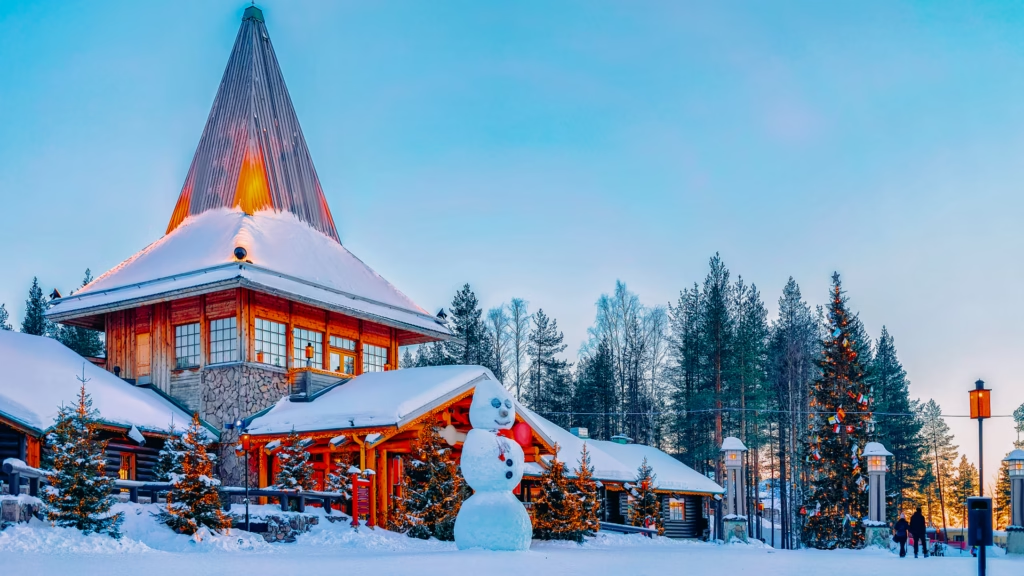
Lapland’s summer is a green, mild, midnight-sun affair with a committed mosquito population, but the reason to come in this window is the autumn. As the season deepens, the far north of Finland turns quiet, crisp, and dark enough for the sky to come alive.
September is a genuine secret. It brings ruska, the short and violent Finnish autumn color, and the aurora arrives while the lakes are still liquid and mirror-flat, which is how you get the reflection shots. September and October are the clearest-skied months of the autumn, with activity boosted by the equinox and temperatures still mild. By November the darkness is enormous and the first dependable snow has settled, but the clouds move in too, and patience becomes part of the trip. Even so, once that snow is down, the whole toolkit of winter opens up.
Don’t miss in Lapland
Aurora hunting · September and October for the clearest autumn skies and mirror-lake reflections.
A glass igloo or aurora cabin · watch the lights from bed, no alarm required.
Ruska hiking · the brief, brilliant autumn color across the fells, peaking in September.
Husky and reindeer sledding · once the first snow settles, usually from November.
Santa Claus Village · on the Arctic Circle in Rovaniemi, open year-round and building toward the December rush.
The aurora calendar in Lapland
Season · late August into early April.
September to October · the autumn sweet spot. Equinox-boosted activity, the clearest skies, ruska color, mild temperatures.
November · the longest darkness and the first dependable snow, but the cloudiest month of the autumn.
Daylight in Rovaniemi · July ~21.5 hrs · August ~17 · September ~13 · October ~9.5 · November ~6
The North, by Daylight Lost
Four destinations, one variable. Here is the whole window in a single box:
July -> November
Reykjavík · ~19.5 hrs -> ~6. Thirteen hours gone.
Rovaniemi · ~21.5 -> ~6. Fifteen hours gone.
Tromsø · 24 -> 0. All daylight gone by November 27th.
Longyearbyen · 24 -> 0. All daylight gone.
The real magic of traveling cool is twofold: the places themselves, and the timing. Go in these months and you trade crowds and heat for smaller groups, gentler shoulder-season prices, and experiences you simply cannot have on a hot beach, from the midnight sun to the aurora.
A last note before you go. This blog post has been about the Arctic North from July to November, but the far north keeps going all winter, and that half is a trip of its own:
- Christmas in Finnish Lapland, with glass igloos and Santa’s real hometown;
- Sapphire-blue ice caves you can walk into deep inside Iceland’s glaciers, open only from November to March;
- Orcas and humpbacks crowding the fjords around Tromsø; and, by February and March, the clearest aurora and deepest snow of the whole year. That is the wild, icy version of a winter escape.
- If you would rather the cozy one, all mulled wine and twinkling squares and cathedral bells, our guide to Europe’s Best Christmas Markets is the place to start.
And if the far north is not your half of the world, part one runs from December through June from the Alaskan Arctic all the way down to Antarctica: polar bear cubs emerging in Churchill, peak aurora over Fairbanks, Patagonia’s trekking season, and the heart of the Antarctic summer.
Found your month? Give us a call and let us send you somewhere seriously cool (pun fully intended)! Contact our excellent travel experts at 503-224-0180 or email [email protected].
Don’t miss a post! Subscribe to our blog!